
Contract automation: the ultimate guide
This is Summize's guide to contract automation, where you'll learn exactly what contract automation could do for your legal team and wider business.
- Contract automation reduces manual effort by streamlining repetitive contract tasks.
- Automation can support contract creation, approvals, review, storage and reporting.
- AI-powered automation helps teams extract insights and review agreements faster.
- The best contract automation solutions connect workflows, people and contract data.

July 9, 2026
Business growth means more customers, suppliers and partners – and more contracts for legal to manage. But many in-house teams are still navigating manual drafting, review and approval processes, even as expectations from the business rise. When contract workflows don’t scale, legal capacity becomes more constrained and strategic work gets deprioritized.
That’s where contract automation comes in – usually in the form of an end-to-end contract lifecycle management (CLM) solution. It’s not just a “nice-to-have” anymore – it’s a vital, strategic foundation. We’re here to explain what contract automation really means for legal teams, why it matters and how it can help legal drive consistency, control and a stronger business impact.
What is contract automation and why do you need it?
Contract automation is the use of software to streamline repetitive contract tasks, including creation, review, approvals, workflows and data extraction. It helps legal and business teams reduce manual work, improve consistency and manage contracts more efficiently.
Why is this software needed? Because workloads are rising and manual ways of working won’t cut it anymore. If 79% of lawyers report growing contract volumes, but only 33% are seeing staffing increases (Thomson Reuters), there needs to be a better way of working.
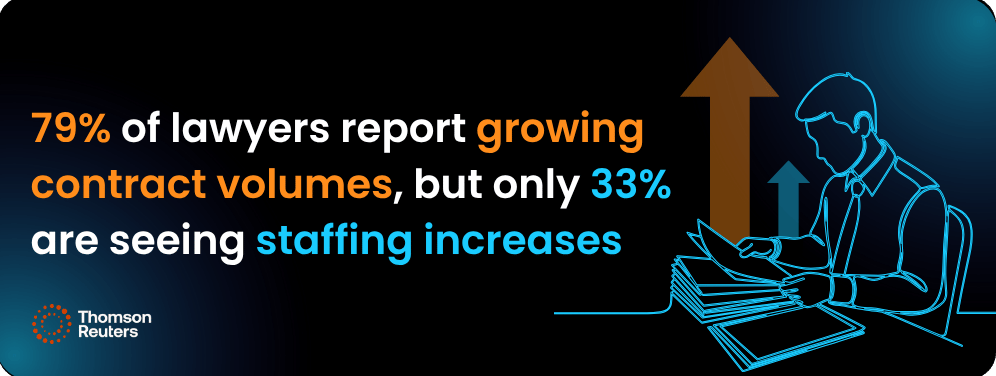
The only way to bridge the gap is through automating the full lifecycle, and legacy systems and point tools are no longer just enough.
{{quote 1}}
How does contract automation work?
Automate contract creation and data capture
How much time does your legal team waste chasing the right intake details and creating every single contract? What if this process was automated?
Using contract automation software, your non-legal teams can generate contracts from pre-approved templates, which automatically pull in key data from intake forms or systems like Salesforce and HubSpot. Legal teams spend less time correcting drafts, while the business gets contracts started faster.
Automate review and triage
Contract automation tools automate review and triages based on a contract’s information – such as its risk value, type or deviations from standard language, with playbooks and fallback clauses guiding responses. Legal expertise is then only applied where it matters most, review cycles are shortened (sometimes by up to 50%) and low-risk contracts don’t drain resources.
Enable collaboration without version chaos
Using the right solution, all edits, comments and redlines can be captured in a single workflow. Teams work from the latest version, reducing errors, rework and execution risk, while improving visibility for all stakeholders.
Automate obligations, renewals and calendar management
With an automated repository and analytics, key dates are captured, synced to calendars and trigger reminders. Legal moves from reactive management to proactive oversight, reducing missed renewals, compliance risks and last-minute firefighting, while supporting stronger commercial control.
Provide self-serve contracting for the entire business
Contract automation software doesn’t just benefit legal teams – it benefits the whole business!
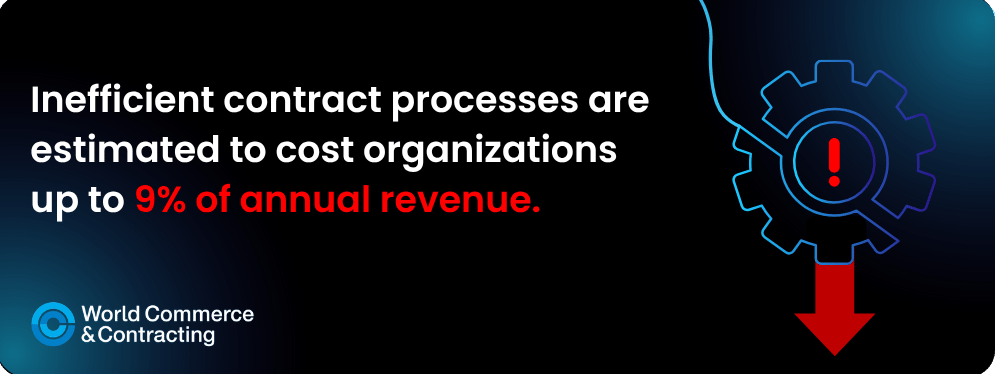
Non-legal teams can generate standard contracts within guardrails, while legal stays in control. This reduces routine requests, accelerates deal cycles and helps the business capture value sooner. Inefficient contract processes have been estimated to cost organizations up to 9% of annual revenue (WorldCC), so automation can help avoid costs associated with delays, missed renewals and compliance issues.
{{download 1}}
How should you get started with contract automation?
Getting started with contract automation doesn’t have to be a huge undertaking – the key is to start small and focus on the areas with biggest impact. Here’s a few tips:
- Identify your highest-volume or highest-friction contracts. Most legal teams we speak to start with NDAs, MSAs, SOWs or vendor agreements – anything that’s repetitive or slows down the business. Prioritizing those gives you quick wins and immediate time savings.
- Map your current workflow. Take a look at how contracts are already moving: who drafts them, who reviews them, who approves them, where they’re stored and where delays happen. You just need enough clarity to understand where automation will help most.
- Choose technology that fits how your team actually works. Different platforms suit different teams – some tools are more template-focused, others are built for collaboration and some just specify in one area. We’d always recommend a full CLM solution (like Summize) that brings everything under one roof – but the most important part is that it fits with your existing ways of working.
- Start with one process, then scale. A good implementation process will focus on one contract type or workflow, and then roll it out more widely. This helps you build internal champions, prove value quickly and avoid overwhelming the team and wider business.
- Measure and communicate results. Track performance metrics of your system like cycle times, approval delays, self-serve rates or reduced admin hours. Sharing wins like these helps reinforce adoption and secures buy-in for expanding automation to more contract types. If you’re not sure which CLM metrics to track, read our full article to find out more.
Automation in real life with Summize's CLM: faster, more confident contract review
When Calvary Robotics came to Summize, they were struggling with slow contract reviews, limited visibility into risk and finding that tools were difficult to adopt without disrupting day-to-day work.
With contract volumes increasing, they needed a solution that could deliver immediate value – and with Summize’s Contract Lifecycle Management (CLM) software, they were up and running within days. They quickly embedded Summize's AI-powered contract reviews into their workflows, allowing them to surface non-standard clauses and risk areas automatically and significantly reduce the time spent on contract review.
{{testimonial 1}}
Contract automation can be more than just a tool – it can help shift you towards being seen as a proactive strategic partner in your business. Freeing up your time from repetitive, low-value tasks, enabling standardization, improving visibility and allowing the business to move faster proves your value as a strategic, commercially-driven team, rather than being seen as a firefighting department.
If you’re interested in how contract automation looks, check out Summize's CLM by clicking below. Or, book your demo with the Summize team if you’re ready to get started in transforming your contract processes.

Richard Somerfield
Chief Technology Officer
Richard, Chief Technology Officer at Summize, drives the company’s tech vision with a deep focus on enhancing the customer experience. With over 25 years of experience in technology and product development, including stints in tech businesses in Silicon Valley, Richard has been instrumental in shaping Summize's Contract Lifecycle Management (CLM) solution. His expertise in both professional and open-source products, allows him to blend innovation with practicality, which helps him lead the technological vision and innovation of Summize. By also closely collaborating with Summize's clients and our sales teams, Richard has the skills to ensure that Summize's CLM platform continually evolves to meet market demands and lead the industry.

Summize has quickly become an indispensable tool for our legal and operations teams. Highly recommended for any business seeking to modernize and simplify their contract lifecycle management.

“As contract volumes grow, the challenge for legal teams isn’t just moving faster, it’s maintaining consistency and control at scale. Contract automation embeds governance directly into the workflow, standardizing drafting, surfacing risk and routing approvals based on clear rules. It doesn’t replace legal judgment, but ensures that legal expertise is focused where it adds the most value: on complex risk decisions rather than repetitive administrative work.”

More helpful contract resources


Even more CLM resources
Learn all about contract lifecycle management in our CLM hub